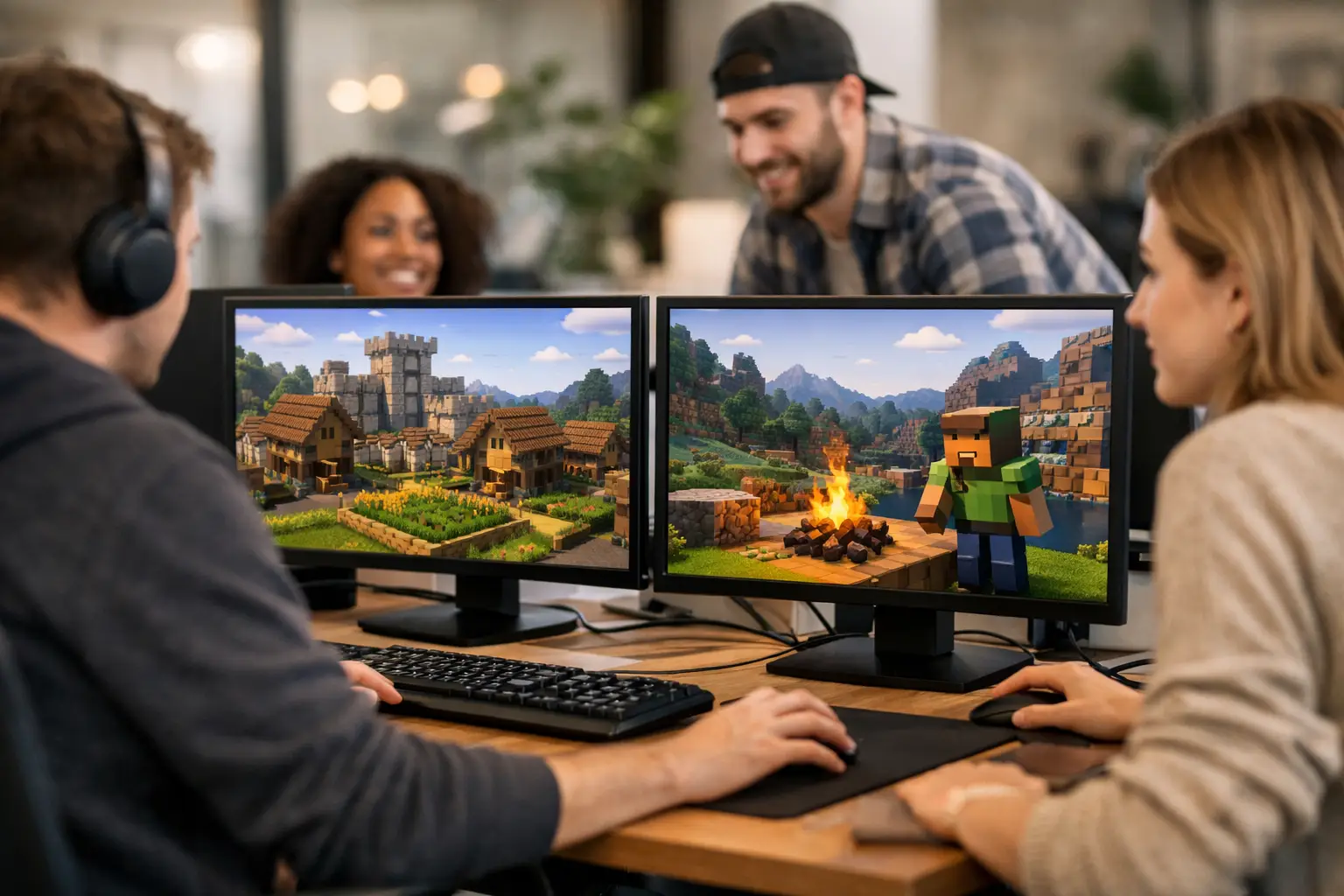
A Minecraft community server example only looks simple from the outside. Players join, build, chat and come back tomorrow. Behind that, the server either feels organised and worth investing time in, or it feels like a chaotic world that will be gone by the weekend.
That difference usually comes down to structure, not size. You do not need hundreds of players, a giant staff team or a heavily customised network to build something people actually stick with. You need a clear idea, sensible setup choices and a server that performs properly when your community starts to grow.
A Minecraft community server example with a strong foundation
Let’s use a realistic Minecraft community server example: a UK-based survival server for friends, friends-of-friends and new public players, aiming for 20 to 50 regulars. It runs Java Edition, keeps the vanilla feel, but adds enough quality-of-life features to stop griefing, reduce admin headaches and give players reasons to stay.
That kind of server works because it sits in the sweet spot. It is not so basic that players get bored after a day, and not so overloaded with mechanics that new players feel lost. For most community admins, that balance matters more than trying to copy a huge public network.
The core idea is simple. You launch a survival world with a community spawn, land protection, active moderation, regular backups and a small number of trusted plugins. Players can build freely, trade, chat and take part in low-pressure events. The goal is not to force progression. The goal is to create a place that feels stable and social.
Start with the server identity before the tech stack
A lot of new owners begin with plugins, RAM and modpacks. That is backwards. First decide what your community is actually for.
If your server is aimed at long-term builders, your decisions will be different from a PvP-heavy world or a fast-reset seasonal map. Builders want map stability, protection tools and confidence that their work will still be there in three months. PvP players may accept more volatility, but they still will not forgive lag, poor balance or staff inconsistency.
For a broad community server, survival remains the safest choice because it is easy to understand and flexible enough for different playstyles. You can then shape the experience with a few rules and quality-of-life additions rather than trying to reinvent Minecraft from day one.
That is where many servers go wrong. They try to be everything at once - survival, minigames, economy, factions, custom gear, quests, crates and six different currencies. What players actually see is clutter. A cleaner setup is easier to run and easier to trust.
The essential setup for a community server
For this Minecraft community server example, the best setup is usually Paper or Purpur on the current stable version, unless you have a specific plugin reason to stay on an older release. That gives you better performance and practical management tools without drifting too far from normal gameplay.
You then build around a handful of essentials. Permissions management, anti-grief logging, claims or land protection, chat moderation, backups and performance monitoring should be treated as standard. An economy plugin can work if trading is part of the server culture, but it should support the community rather than dominate it.
Spawn matters more than people think. It does not need to be massive, but it should be clear, safe and useful. Players should spawn in, understand the rules quickly and know where to go next. If spawn feels unfinished or confusing, the rest of the server already looks less reliable.
Performance is just as visible. Players may not know what hardware you are running, but they notice rubber-banding, slow chunk loading and random crashes immediately. If you are using a host, this is where gaming-focused infrastructure makes a real difference. Fast deployment is nice, but low latency, stable uptime and quick support matter much more once real players are online.
Rules that protect the server without killing the mood
The best community servers do not have the longest rule pages. They have rules that are easy to understand and consistently enforced.
For a general survival server, that usually means no griefing, no cheating, no hate speech, no spam and no harassment. You can add guidelines around claims, inactivity or redstone lag machines if needed, but keep the core rules readable. Players should not need a solicitor to work out whether they are allowed to build a farm.
Consistency is where trust is built. If one player is punished for toxic chat and another gets away with it because they are well known, your community notices. Staff do not need to act like robots, but they do need to be fair.
This is also why staff teams should start small. Too many servers hand out moderator roles early because it feels like growth. In reality, it often creates drama, mixed decision-making and a hierarchy that alienates normal players. One or two dependable people is better than six half-active mods with different standards.
Features players actually value
Most community players are not looking for gimmicks. They want a good server that respects their time.
That usually means practical features: teleport requests, homes, a simple shop or player market, rollback protection and regular events. Seasonal builds, treasure hunts or community projects often do more for retention than expensive custom systems. They give people shared moments without changing the whole identity of the server.
Economy can help, but it depends on the audience. A lightweight player-driven economy tends to feel natural. A heavily monetised or over-engineered economy can make a community server feel transactional. If everything is tied to grinding cash, players who just want to build and socialise may drift away.
The same trade-off applies to monetisation. Cosmetic perks, convenience extras and supporter ranks can work if they are fair. Pay-to-win perks usually poison trust quickly, especially on smaller servers where every imbalance is obvious.
Growth is less about advertising and more about retention
Many owners focus too heavily on getting players through the door. That matters, but it is only half the job. If ten people join and nine never return, your issue is not discovery. It is experience.
A good first session should answer three questions fast: what is this server, is it stable and should I stay? That means clear onboarding, visible activity and a world that feels alive. Empty chat, broken commands and half-finished systems make even a technically decent server feel abandoned.
This is why regular community touchpoints matter. Announce resets clearly if you use them. Run occasional events. Respond to player questions. Fix problems quickly. Players are far more forgiving of limited features than they are of silence and uncertainty.
If you run a Discord alongside the server, it should support the game rather than replace it. Use it for updates, support and community chat, but avoid creating a split where the real social circle exists off-server and new players feel locked out.
Scaling without making a mess
A healthy server changes over time. More players means more chunks loaded, more farms, more plugins and more moderation pressure. If you do not plan for that, growth creates instability instead of momentum.
This is where simple infrastructure choices save time. Choose hosting that lets you upgrade cleanly, restart safely, manage backups and adjust versions without turning every change into a support ticket. For many admins, especially those not interested in manual server work, a custom control panel and responsive human support are worth far more than shaving a tiny amount off the monthly price.
There is always a balance between cost and headroom. Starting too big wastes budget. Starting too small creates lag just when your server is beginning to gain traction. A sensible route is to launch with enough resources for your expected active player count, monitor usage properly and upgrade before complaints start.
That practical middle ground is often the right move for community-led Minecraft hosting. Providers such as 24 Play appeal to that audience for a reason - quick deployment, straightforward scaling and support that understands game servers rather than treating them like generic hosting products.
What this Minecraft community server example gets right
The strength of this Minecraft community server example is not that it is flashy. It is that it is dependable. Players know what the server is for, they trust that their builds are safe and they do not have to fight the platform just to have a good evening with friends.
That is what turns a server from a short-lived project into a proper community. Not endless features. Not a giant launch. Just solid performance, sensible rules and a clear reason to come back.
If you are building your own server, keep it focused and keep it stable. Players can forgive modest beginnings. They rarely forgive a server that feels temporary.